Used Car Buying Checklist: What to Inspect Before You Pay
A practical used car checklist: paperwork, body, engine, interior, test drive and independent inspection. Spot problems before you hand over any money.

Before you pay for a used car, check the paperwork, inspect the body and engine, test drive it properly and, ideally, have an independent mechanic look it over. Most expensive surprises can be spotted with a careful hour of checking. Use this checklist to work through it step by step.
Start with the paperwork
Problems with ownership or history can make a car worthless, however good it looks. Check the documents before you get attached to the car.
- Confirm the seller's name matches the ownership or registration document.
- Find the vehicle identification number (VIN) or chassis number on the car and make sure it matches the papers.
- Ask for service records, receipts and any inspection certificates.
- Check whether the car has unpaid finance or a loan secured against it.
- Look for signs the car was written off, stolen or badly damaged.
Many countries have official or commercial services that report a car's history using its identification number. Check your vehicle registration authority for what is available locally.
Inspect the outside in good light
View the car in daylight, on level ground and when it is dry. Rain and poor lighting hide dents, scratches and uneven paint.
Walk around slowly and look along each panel from an angle. Ripples, mismatched colour or uneven gaps between panels can point to past accident repairs. Check for rust, especially around wheel arches, door bottoms and under the car.
Look at the tyres. Uneven wear can signal alignment or suspension problems, and tyres worn close to the limit mean an extra cost soon. Check all lights, lenses and glass for cracks.
Check under the bonnet
Ask the seller not to start the car before you arrive. A cold engine tells you more than a warm one.
- Look for oil, coolant or other fluid leaks around the engine and on the ground beneath.
- Pull out the oil dipstick; the oil should not look milky or gritty.
- Check the coolant level and colour; oily residue in it is a warning sign.
- Look at belts and hoses for cracks, fraying or bulges.
- Watch for smoke from the exhaust at start-up.
For electric and hybrid cars, ask for a battery health report if the manufacturer or a workshop can provide one. Battery condition has a big effect on value.
Look inside the car
The interior shows how the car was treated. Heavy wear on the steering wheel, pedals or driver's seat should roughly match the distance shown on the dashboard.
Test every switch and feature: windows, locks, mirrors, air conditioning, heating, lights, wipers, horn, infotainment and seat adjustments. Repairing electronics can be costly.
Check for damp carpets, a musty smell or water marks, which can indicate leaks or flood damage. Make sure dashboard warning lights turn on briefly at start-up and then go off.
Take a proper test drive
Drive for at least 20 minutes on different roads if you can. Include slow traffic, faster roads, bumps and a safe place to brake firmly.
| What to test | What is normal | Warning signs |
|---|---|---|
| Starting | Starts promptly, idles smoothly | Hard starting, rough idle, warning lights |
| Gear changes | Smooth and quiet | Slipping, jerking, grinding or delays |
| Braking | Straight, firm and quiet | Pulling to one side, squealing, vibration |
| Steering | Straight and responsive | Wandering, heavy feel, knocking on turns |
| Suspension | Absorbs bumps quietly | Clunks, bouncing, uneven ride |
| Engine | Pulls evenly as it speeds up | Hesitation, knocking, overheating |
Turn the radio off so you can hear the car. After the drive, look under the car again for fresh leaks.
Get an independent inspection
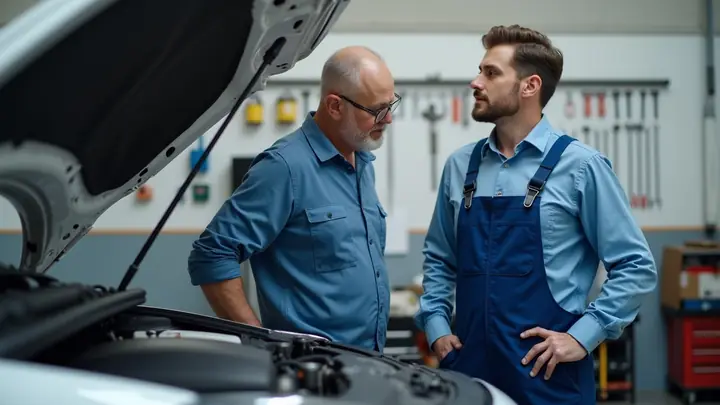
Even a careful buyer can miss hidden problems. A qualified mechanic you choose, not one the seller recommends, can check the frame, suspension, engine and electronics, and may run a diagnostic scan.
If a seller refuses to allow an inspection, treat it as a serious red flag. Genuine sellers usually accept a reasonable request, especially if you arrange it at a convenient time.
Use the inspection results to negotiate. Needed repairs are a fair reason to ask for a lower price or to walk away.
Before you hand over money
Agree on the price and what is included in writing. Get a receipt or bill of sale showing both names, the car's identification number, the date and the amount paid.
Avoid paying large sums in cash where possible, and never pay a deposit for a car you have not seen in person. Rules on transferring ownership, registration and insurance differ by country, so check with your local registration authority on exactly what to complete and when.
The bottom line
A thorough used car check covers the papers, the body, the engine, the interior and a real test drive. An independent mechanic's inspection adds a layer of protection that is worth the cost.
Take your time and do not let a seller rush you. If anything feels wrong, there will always be another car.
Frequently asked questions
Should I pay for a pre-purchase inspection?
In most cases, yes. A qualified mechanic can spot hidden damage, leaks and worn parts that are hard for buyers to see. The fee is small compared with the cost of a major repair.
What paperwork should a used car have?
At minimum, proof of ownership or registration in the seller's name and a valid identification number that matches the car. Service records, inspection certificates and receipts for repairs are a strong bonus. Required documents differ by country, so check with your vehicle registration authority.
Why should I see the engine cold?
A cold start can reveal starting problems, unusual noises and smoke that disappear once the engine warms up. If the seller has already run the car before you arrive, ask why and consider coming back.
Is a high distance reading always bad?
Not necessarily. A well-maintained car with high distance can be a better buy than a neglected one with low distance. Service history and condition matter more than the number alone.
Disclaimer: This guide is general information only and may not fit your situation or country. Rules, prices and requirements change, so check the details with the official source or a qualified professional before you act. Read our full disclaimer.